Millennial Font: Capturing the Spirit of a Generation in Design
More Than Just a Typeface
You've seen it before: a font that just feels right for the moment. The Millennial font is precisely that—a visual voice for contemporary design. It’s not a relic of the past or a fleeting novelty. This is a premium font built with a modern, stylish DNA, designed to communicate the intelligence, freedom, and innovative spirit that defines today’s creative and professional landscape. Its characters are clean yet full of personality, offering a fresh take on modern typography that avoids cold minimalism. Think of it as a design asset that understands context, whether you're crafting a social media campaign or establishing a new brand identity.
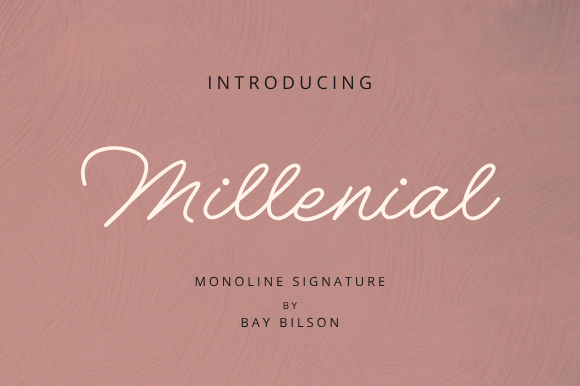
The visual characteristics of Millennial are its superpower. It balances elegance with a subtle edge, making it incredibly versatile. The letterforms are crafted with a confident, contemporary flair—sharp enough to be authoritative in a logo design, yet fluid enough to feel approachable in editorial design. This isn't a serif font weighed down by tradition, nor is it a stark, impersonal sans serif font. It occupies a compelling middle ground, often leaning towards a geometric or humanist foundation that feels both intelligent and accessible. This unique personality allows it to convey innovation without sacrificing professionalism.
Where Millennial Truly Shines: Practical Applications
Knowing a font is stylish is one thing; knowing where to use it is what separates good design from great strategy. The Millennial font excels in projects where clarity and contemporary appeal are paramount. For web design, it’s a powerhouse for headings, hero text, and calls-to-action, where it can guide the user’s eye with intention. Its strong presence ensures your message cuts through the digital noise, improving visual hierarchy and user engagement from the first glance.
In the realm of branding, this creative font is a strategic choice. For startups, tech companies, boutique agencies, or lifestyle brands targeting a discerning audience, Millennial helps build brand perception that is forward-thinking and trustworthy. Imagine it on a product label for an artisanal food brand or as the primary typeface for a wellness app—it immediately sets a tone of quality and modern sensibility. For packaging design, its clarity ensures vital information is readable, while its style elevates the unboxing experience.
For content creators and publishers, the font is a game-changer. It transforms social media graphics from generic to memorable, helping posts stand out in a crowded feed. In editorial design, such as magazine layouts, annual reports, or e-books, Millennial can be used for pull quotes, chapter titles, and sidebars to create dynamic interest and break up long blocks of text. It’s also an excellent choice for logo design, where a single, distinctive wordmark can become the cornerstone of a brand’s entire visual identity.
Integrating Millennial Into Your Workflow: A Designer's Guide
Adopting a new typeface like Millennial should be a thoughtful process. First, evaluate the project’s core needs. Is the goal to appear innovative, reliable, or disruptive? Millennial leans toward innovation and style, making it ideal for projects that need a confident, contemporary voice. It might be less suitable for ultra-formal, traditional contexts like a law firm’s primary document, but it could work beautifully for their marketing materials.
Next, consider font pairing. A display font like Millennial rarely works alone. Pair it with a clean, highly readable sans serif font for body text. A font like Lato, Open Sans, or Source Sans Pro can provide the perfect counterbalance, ensuring your paragraphs remain easy to read while your headlines make a bold statement. Avoid pairing it with another strong script font or handwritten font, as this can create visual competition and confusion.
Always review the full font family. Check what styles are included—does it have multiple weights (Light, Regular, Medium, Bold, Black)? Are there italics? The more variations available, the more flexibility you have to create sophisticated visual hierarchy and typographic emphasis within a single design system. Before finalizing, test it rigorously. Set it at different sizes to check for readability—a beautiful display font can become illegible at small sizes if its x-height is too low or its letter spacing is too tight. Mock up your key applications: a website header, a business card, an Instagram post. See how it performs in the real world.
Finally, understand the licensing. As a commercial font, ensure you have the correct license for your intended use—whether for a single client project, for your own business’s unlimited use, or for embedding in digital products. This is a critical step for professionalism and respecting the type designer’s work. When chosen and applied with care, the Millennial font becomes more than just a design element; it becomes a cohesive thread that ties your entire project together, ensuring consistency, enhancing recognition, and engaging your audience on a level that feels both current and authentic.