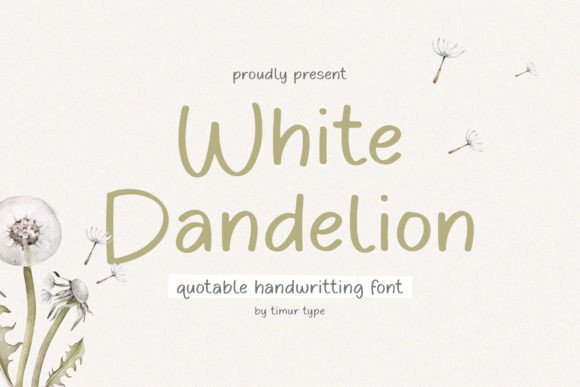
White Dandelion: The Friendly Handwritten Font for Authentic Designs
There's something genuinely charming about a handwritten font that doesn't try too hard. White Dandelion strikes that balance beautifully—it's sweet, approachable, and carries the kind of natural warmth that makes people stop scrolling and actually look at what you've created. Whether you're designing a wedding invitation, building a brand identity for a small business, or putting together social media graphics that need personality, this creative font offers a versatility that's surprisingly rare in the script font category.
Understanding the Visual Character of White Dandelion
At its core, White Dandelion is a handwritten font with a distinctly organic feel. The letterforms flow with a relaxed rhythm that mimics real penmanship, but without the inconsistencies that make some script fonts difficult to read at smaller sizes. Each character carries subtle variations in stroke weight—thicker on downstrokes, lighter on upstrokes—that give it that authentic, hand-lettered quality designers often chase with premium font options.
The overall personality leans friendly and approachable rather than formal or elegant. Think of it as the font equivalent of a warm smile from someone you trust. The letter spacing feels natural, not overly tight or artificially stretched, which contributes to its readability across different applications. Unlike some handwritten fonts that feel juvenile or overly whimsical, White Dandelion maintains a sophistication that works for both personal projects and commercial use.
The lowercase letters particularly shine in this typeface. They connect in ways that feel fluid and intentional, creating a sense of continuity that's essential for any script font meant to be used in longer phrases or sentences. The uppercase characters add just enough distinction to create visual hierarchy without breaking the overall cohesion of the design.
Brand Identity and Logo Design
For small businesses, especially those in lifestyle, wellness, food, or artisan spaces, White Dandelion can become a cornerstone of brand identity. A bakery that wants to convey homemade quality, a yoga studio seeking a calming presence, or a boutique clothing brand aiming for approachability—these are scenarios where this handwritten font naturally fits. The key is matching the font's personality with your brand's core values. If your business communicates warmth, authenticity, and personal connection, White Dandelion speaks that language fluently.
In logo design specifically, this typeface works beautifully as a secondary element or as the primary wordmark when paired thoughtfully. A strong logo often combines a display font with something more structured—a serif font or sans serif font for balance. White Dandelion handles the expressive role exceptionally well, leaving the supporting typeface to handle clarity and professionalism.
Editorial and Publishing Projects
Magazine headlines, blog post titles, chapter openers in self-published books—these are spaces where White Dandelion can add visual interest without sacrificing the reading experience. Editorial design often requires fonts that create emotional connection quickly, and a handwritten font with this level of polish does exactly that. It draws the eye, establishes tone, and invites readers into the content that follows.
For bloggers and content creators working on digital platforms, White Dandelion offers a way to differentiate visual content from the sea of standard web fonts. Pull quotes, featured image overlays, and newsletter headers benefit from this kind of typographic personality.
Packaging and Print Design
Product packaging thrives on personality. Whether you're designing labels for artisanal honey, custom candle packaging, or a subscription box insert, White Dandelion brings that handcrafted feel consumers respond to emotionally. In packaging design, the font communicates care, attention to detail, and the human touch behind the product.
Print materials like greeting cards, invitations, thank-you notes, and event programs are natural homes for this typeface. The font's sweet, friendly character makes it particularly suited to wedding stationery, baby shower invitations, and celebratory announcements where warmth matters more than formality.
Digital and Social Media Applications
Web design presents unique challenges for handwritten fonts, but White Dandelion handles them reasonably well when used strategically. Website headers, call-to-action buttons, and hero section text can benefit from its personality without compromising the user experience—provided you pair it with a clean sans serif font for body text.
Social media graphics are perhaps where this font feels most at home in the digital space. Instagram stories, Pinterest pins, Facebook cover images, and promotional graphics all benefit from typefaces that stand out in crowded feeds. White Dandelion's distinctive character helps content feel personal and authentic, qualities that drive engagement on social platforms.
Font Pairing Strategies
The most successful designs using White Dandelion typically pair it with typefaces that provide contrast and structure. A clean sans serif font like Montserrat or Lato creates a modern, balanced composition. If you want something with more traditional character, a serif font like Playfair Display or Lora can create an elegant pairing that works for editorial and publishing projects.
The general principle is straightforward: let White Dandelion handle the expressive, attention-grabbing elements while a more neutral typeface takes care of readability and information hierarchy. This approach ensures your design communicates effectively while maintaining visual interest.
Readability and Hierarchy
Any experienced designer will tell you that handwritten fonts require thoughtful implementation. White Dandelion performs best at medium to large sizes—think headlines, subheadings, and featured text rather than paragraphs of body copy. At smaller sizes, even well-designed script fonts can become difficult to read, particularly on screens with varying resolutions.
Consider using this font for three to seven words at a time. Short phrases, names, titles, and taglines are its sweet spot. When you need to convey more information, switch to your paired body typeface and let White Dandelion set the emotional tone without bearing the full communicative load.
Evaluating Project Fit
Before committing to White Dandelion for any project, ask yourself a few practical questions. Does the project's tone align with a friendly, approachable handwritten style? Will the font be used at sizes where its details remain visible and legible? Does your target audience respond well to personal, handcrafted aesthetics? If the answers lean positive, this typeface deserves serious consideration.
It's worth testing the font with your actual content before finalizing any design. Type out the specific words and phrases you'll be using. Check how different letter combinations look together. Some handwritten fonts have problematic letter pairs that create awkward spacing or visual confusion—White Dandelion handles most combinations gracefully, but your specific content deserves a direct evaluation.
Licensing and Commercial Use
For designers and business owners planning commercial projects, understanding font licensing is essential. White Dandelion, as a premium font, comes with specific licensing terms that dictate how it can be used across different applications. Before incorporating it into client work, product packaging, or merchandise, review the license carefully to ensure your intended use is covered. Most commercial font licenses distinguish between desktop use, web use, and embedding in digital products—each may require different permissions or additional licenses.
Making White Dandelion Work for Your Creative Vision
The best design assets are the ones that serve your creative goals without creating obstacles. White Dandelion offers that rare combination of distinctive personality and practical versatility that makes it worth exploring across a range of projects. Its strength lies not in being the loudest or most dramatic typeface available, but in being genuinely warm, consistently readable, and adaptable enough to support everything from a small business brand identity to a personal crafting project.
As with any design asset, the font itself is only part of the equation. How you use it—what you pair it with, where you place it, how much space you give it to breathe—determines whether it enhances your work or distracts from it. Start with small applications, experiment with different pairings, and pay attention to how the typeface interacts with your other design elements. Modern typography rewards thoughtful experimentation, and White Dandelion is the kind of creative font that invites exactly that.